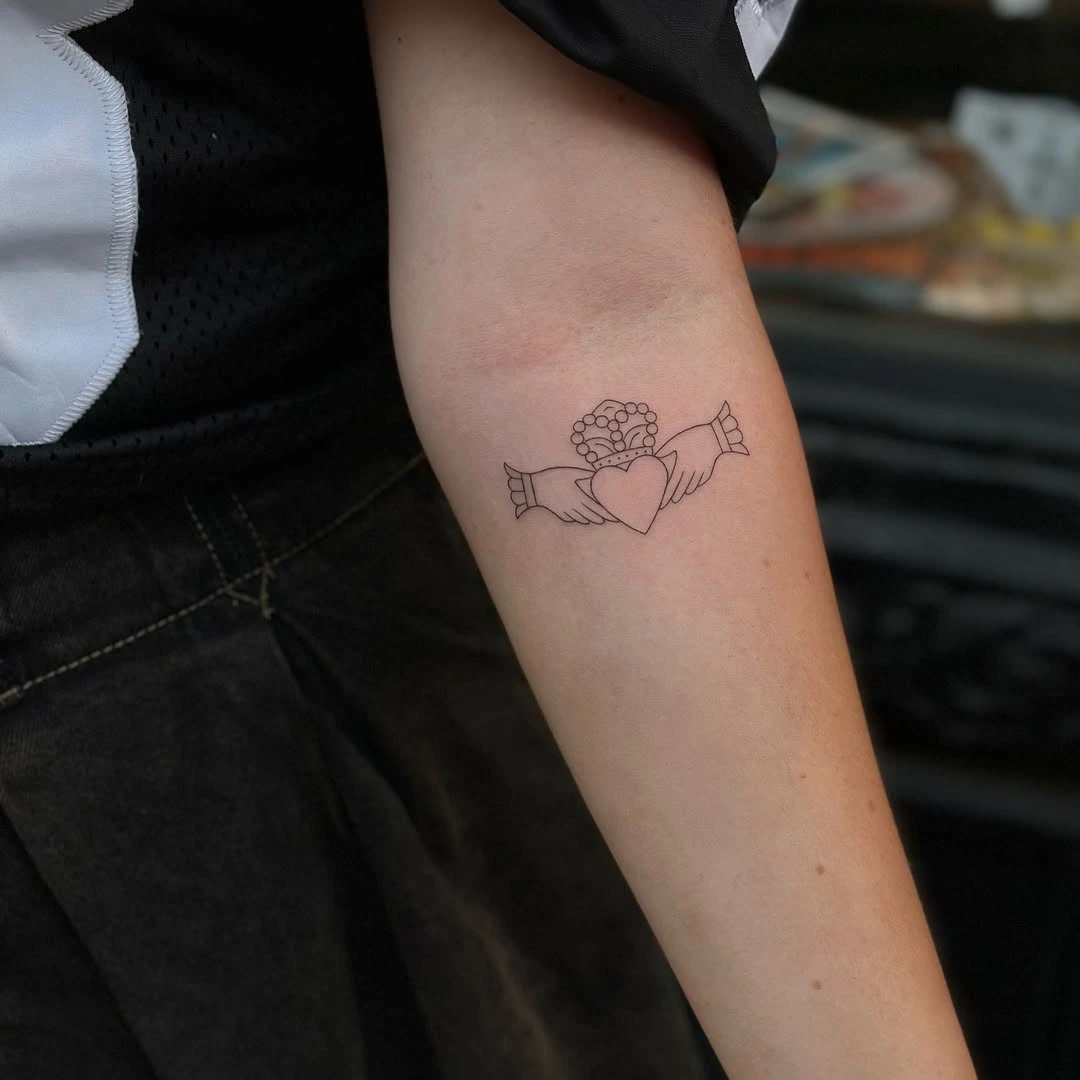
Finger tattoos are everywhere. Scroll through Instagram for thirty seconds and you’ll see rings, initials, tiny symbols, and micro designs wrapped around knuckles and inner fingers. The appeal is obvious — they’re visible, minimal, and undeniably cool.
Do we do finger tattoos at XOXO? Yes, we do — but please read below first.
But here’s what most of those Instagram posts don’t show you: the same tattoo six months later.
Finger tattoos are among the most requested — and the most misunderstood — styles in modern tattooing. Before booking one in Dublin, there are some things worth knowing. This guide covers the reality of finger tattoos: what works, what doesn’t, how they heal, and what to realistically expect from ink on one of the most challenging parts of the body.
Why Finger Tattoos Are Different
The skin on fingers is unlike skin anywhere else on the body. It’s thinner, it moves constantly, and it’s exposed to more friction, water, and sunlight than almost any other area. These factors combine to make fingers one of the hardest placements for tattoo ink to hold long-term.
The epidermis on fingers regenerates faster than on the forearm or back. This means the body actively pushes ink out more aggressively. Add to that the constant bending, gripping, and washing that hands endure daily, and the result is a tattoo that faces more challenges than most.
None of this means finger tattoos are a bad idea. It means they require different expectations and a clear understanding of what’s realistic.
📌 Key Fact
Most reputable tattoo studios consider finger tattoos a “high maintenance” placement. Touch-ups are common and often expected — not because the artist did something wrong, but because of the nature of the skin in that area.
The Fading Question
Every finger tattoo will fade to some degree. This is not opinion — it’s biology. The question is how much and how fast.
Several factors influence fading speed:
✦ Placement on the finger — the side of the finger and inner finger fade fastest. The top of the finger (between knuckles) holds ink better because there’s less friction.
✦ Design complexity — simple, bold designs with adequate spacing hold up far better than intricate detail work. Fine lines on fingers are the most vulnerable to blurring.
✦ Design weight — bolder designs with thicker lines will stay bold and hold their shape over time. Fine line work on fingers can start fading in as little as two weeks after healing. The heavier the line weight, the longer the tattoo holds.
✦ Lifestyle — people who work with their hands, wash frequently, or spend time in water will see faster fading. Office workers tend to retain finger tattoos longer than tradespeople.
What Actually Works on Fingers
Bold, Simple Designs
Thick lines, solid fills, and simple shapes are the gold standard for finger tattoos. Think: solid bands, arrows, crosses, hearts, moons, dots, and simple geometric shapes. These designs have enough weight to survive the fading process and still look intentional years later.
Single Letters and Initials
A single letter or initial — particularly in a bold font — is one of the most reliable finger tattoo choices. Script and cursive lettering can work but requires thicker strokes than what’s typically used on other body parts.
Knuckle Text
Four-letter words across the knuckles — a classic. These work well because the top of the finger holds ink better than the sides, and bold capital letters are inherently durable. The tradition dates back decades and for good reason: it works.
⚠️ What to Avoid on Fingers
Ultra-fine line work, detailed portraits, micro realism, watercolour effects, and anything with subtle gradients. These styles are beautiful on forearms and ribs — on fingers, they break down quickly. A responsible artist will steer you away from designs that won’t last.
Pain: How Much Do Finger Tattoos Hurt?
Finger tattoos are widely considered to be among the more painful placements. The skin is thin, there’s very little fat or muscle to cushion the needle, and the bone is right beneath the surface. Most people describe the sensation as a sharp, vibrating sting — quite different from the dull ache of a forearm or thigh tattoo.
The good news: finger tattoos are small. Most sessions last 30 minutes to an hour. The intensity is higher than average, but the duration is short enough that most people handle it without issue. Anyone who’s sat through a larger piece elsewhere on their body will find a finger tattoo very manageable.
First-timers sometimes choose a finger tattoo because of the small size, assuming it will hurt less than a bigger piece. It’s worth knowing in advance that the opposite is often true — small doesn’t mean painless, particularly on hands and fingers. At XOXO, our policy is that we don’t do finger tattoos for first-timers — we want your first tattoo experience to be on a placement where you can enjoy the process and understand how your skin heals before moving to a high-maintenance area like fingers.
How Finger Tattoos Heal
Healing a finger tattoo is trickier than healing a tattoo on most other body parts. Hands are almost impossible to keep still, dry, and protected — the three things a fresh tattoo needs most.
The typical healing timeline:
✦ Days 1-3: Redness, mild swelling, and tenderness. The tattoo will look bold and dark.
✦ Days 4-7: Peeling begins. This is normal. Do not pick at the skin — let it shed naturally.
✦ Days 7-14: The tattoo enters the “ugly phase.” It may look faded, patchy, or cloudy. This is temporary.
✦ Days 14-21: A lot of finger tattoos can fade significantly during this period depending on the person’s skin type and body condition. This varies hugely between individuals — even if you’ve had a finger tattoo before that healed perfectly, the next one on a different finger could behave completely differently. This is normal and not a reflection of the artist’s work.
✦ Weeks 3-6: Full healing completes beneath the surface. The final result becomes visible.
During healing, the biggest enemies are water exposure, friction, and picking. Washing hands is unavoidable, but minimising unnecessary contact with water — and patting dry immediately after — makes a real difference.
Detailed aftercare instructions can be found in this aftercare guide.
Touch-Ups: Expect Them
With most tattoo placements, touch-ups are occasional and optional. With finger tattoos, they’re closer to inevitable. It’s not a sign of a bad artist — it’s the nature of the placement.
A good studio will be transparent about this upfront. Many studios in Dublin, including XOXO Tattoo Studio on Capel Street, offer a complimentary touch-up on finger tattoos within a reasonable timeframe after the initial session. This is standard practice across reputable studios.
Some clients come back for a touch-up once and the tattoo holds well after that. Others may need periodic refreshing every few years. The frequency depends on the design, the placement on the finger, and the individual’s skin and lifestyle.
Choosing a Studio for Finger Tattoos in Dublin
Not every tattoo artist is comfortable tattooing fingers, and that honesty is actually a good sign. Finger work requires specific experience — the needle depth, speed, and technique are all different from tattooing a forearm or back.
When choosing a studio for a finger tattoo in Dublin, look for:
✦ Healed examples in their portfolio — any artist can make a fresh finger tattoo look good. Ask to see healed work at 3-6 months.
✦ Honest communication — a good artist will tell you if your design idea won’t work on a finger, and suggest alternatives that will hold up.
✦ Touch-up policy — ask about it before booking. Studios that include touch-ups demonstrate confidence in their work and understanding of the placement.
✦ Willingness to say no — the best studios will decline a finger tattoo if the design is too detailed for the placement. That’s professionalism, not rudeness.
XOXO Tattoo Studio on Capel Street, Dublin 1, accepts finger tattoo bookings for designs that are appropriate for the placement. Walk-ins are welcome when availability allows, or clients can book a consultation to discuss their design first.
Finger Tattoo FAQs
How long do finger tattoos last?
A well-executed finger tattoo can look sharp for 2-5 years before needing a touch-up, depending on placement, design complexity, and lifestyle. They don’t disappear — they gradually soften and may need periodic refreshing.
Are finger tattoos more expensive than other small tattoos?
Pricing is generally similar to other small tattoos. Some studios charge a slightly higher minimum for finger work because of the technical difficulty and the likelihood of needing a touch-up. Ask about pricing and touch-up policies when booking.
Can I get a finger tattoo as my first tattoo?
Many studios in Dublin, including XOXO, don’t offer finger tattoos as a first tattoo. Fingers are one of the most painful and unpredictable placements, and without prior tattoo experience it’s difficult to know how your skin will react to the process. A first tattoo on a more forgiving area gives you a chance to understand healing, aftercare, and your own pain tolerance before committing to a high-maintenance placement.
Visibility
Please consider that finger tattoos are highly visible — they’re one of the few placements that are on display almost all the time. Unlike an arm or leg tattoo, there’s no easy way to cover them with clothing. Make sure you’re comfortable with that visibility in your professional and personal life before committing.
Can finger tattoos be removed?
Laser removal can lighten or remove finger tattoos, but the process is more difficult on hands than on other body parts due to the thin skin and proximity to bone. Full removal typically requires more sessions than on areas with thicker skin.
What’s the best placement on the finger?
The top of the finger between knuckles holds ink best. The side of the finger is popular but fades faster due to friction. The inner finger is the most discreet option but also the most prone to fading — it’s in constant contact with adjacent fingers.
Should I moisturise my finger tattoo?
Yes — but sparingly. A thin layer of unscented moisturiser 2-3 times daily during healing helps prevent over-drying and cracking. Avoid heavy creams or petroleum-based products. Follow the aftercare guide provided by your studio.
Considering a Finger Tattoo?
Book a free consultation to discuss your design and get honest advice on what will work best.
Read More